

What Is Atrial Fibrillation?
Atrial fibrillation, commonly called AFib, is an irregular heart rhythm that begins in the heart’s upper chambers, known as the atria. Instead of beating in a steady, coordinated pattern, the atria beat irregularly and may not move blood as efficiently as they should.
AFib may be continuous, or it may occur in episodes that come and go. Some people experience a rapid or irregular heartbeat, fluttering in the chest, fatigue, dizziness, weakness, or shortness of breath. Others have no noticeable symptoms.
Why Does AFib Matter?
When blood does not move normally through the atria, it may collect and form a clot. A clot can travel to the brain and cause a stroke. AFib is also associated with heart failure and other cardiovascular complications.
Because AFib may occur without symptoms, checking the heart’s rhythm can provide valuable information and help identify when medical follow-up may be appropriate.
How Is the Screening Performed?
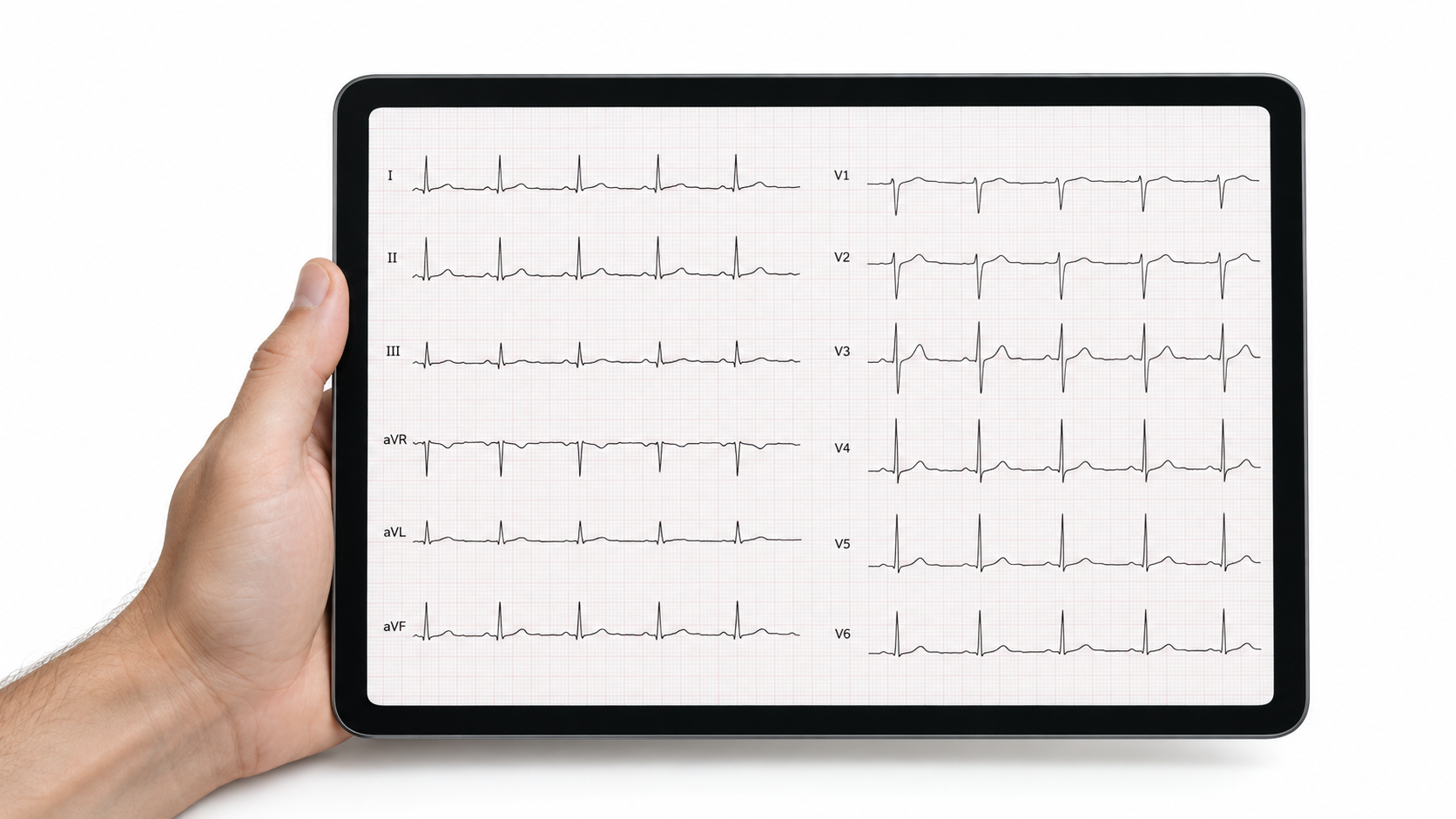
Our AFib screening uses the FDA-cleared 12L resting ECG system to record the electrical activity of your heart.
While you rest comfortably, a trained team member places five small disposable electrodes on the skin of your limbs and chest. The ECG recording itself takes only a short time. The test is:
• Quick
• Painless
• Noninvasive
• Radiation-free
The electrodes only record the heart’s natural electrical signals; they do not send electricity into your body. Brief access to areas of the chest is required for accurate electrode placement, and appropriate privacy and draping are provided.
Benefits of AFib Screening
1. Checks Your Heart’s Rhythm
The ECG records your heart’s electrical activity and checks for a pattern consistent with atrial fibrillation during the screening.
2. May Identify an Irregular Rhythm Without Symptoms
Some people with AFib feel completely normal. A resting ECG may identify AFib when it is occurring even if the person does not notice palpitations or other symptoms.
3. Adds an Electrical Assessment to Your Cardiovascular Screening
Ultrasound evaluates the heart’s structure, pumping function, valves, and blood vessels. An ECG provides different information by evaluating the heart’s electrical rhythm. Together, these tests provide a more complete view of cardiovascular health risks.
4. Provides a Shareable ECG Record
A qualified physician reviews the ECG before the screening result is finalized. Your result can then be shared with your primary care physician or cardiologist when follow-up is recommended.
Who May Consider AFib Screening?
The chance of developing AFib increases with age. Other risk factors may include:
• High blood pressure
• Coronary artery or other heart disease
• Heart valve disease
• Diabetes
• Obesity
• Sleep apnea
• An overactive thyroid
• Chronic kidney disease
• Smoking
• A family history of AFib
AFib screening is included in CardioProtect™ Advanced, our comprehensive package designed for adults age 40 and older who want more in-depth information about their heart and vascular health.
Understanding Your Result
This screening provides a snapshot of your heart rhythm during the ECG recording. A normal result means that AFib was not identified during that recording. It does not guarantee that intermittent AFib is absent because an episode may not occur during the test.
Why It Matters
Your heartbeat can feel normal even when an irregular rhythm is present. Adding AFib screening to your cardiovascular assessment provides another important piece of information—your heart’s electrical rhythm—alongside the structural and vascular information obtained from your other CardioProtect™ Advanced screenings.
Important Screening Notice
This is a preventive screening and is not a medical diagnosis. It does not replace a conventional diagnostic 12-lead ECG, Holter monitor, event monitor, physician examination, or emergency medical care. Do not begin, stop, or change any medication based only on a screening result.