ECG vs Echocardiogram: Electrical Recording or Heart Images?
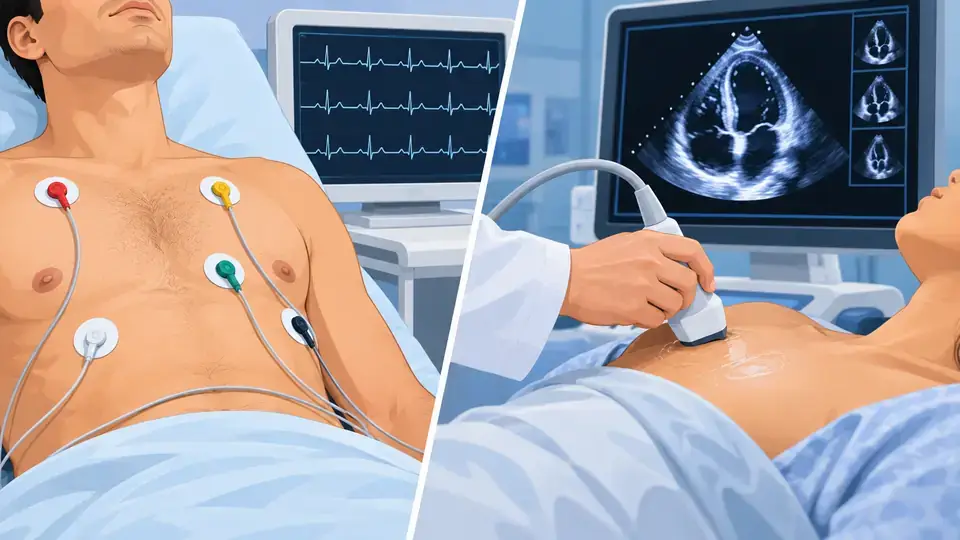
ECG vs echocardiogram is a comparison between two different examinations. An electrocardiogram, also called an ECG or EKG, records electrical activity associated with the heartbeat. An echocardiogram uses ultrasound to create images of the heart. They can provide complementary information, but one does not automatically replace the other.
If a clinician recommends a test, ask for its exact name and purpose before booking. Advanced Sonography Screening describes resting ECG assessment and basic heart ultrasound screening. Confirm the scope of the service rather than assuming a preventive package fulfills every diagnostic request.
ECG vs echocardiogram: the basic distinction
An ECG produces an electrical recording, while an echocardiogram produces ultrasound images. Both relate to the heart, but the information is collected differently. A familiar abbreviation or the phrase "heart test" is not enough to establish which examination a person has been advised to receive.
The American Heart Association's ECG explanation describes how the recording reflects the heart's electrical activity, rate and rhythm. Its echocardiogram overview explains the use of sound waves to assess structure and function. These are different types of evidence for a clinical assessment.
Neither test name by itself tells you why it is being recommended. Ask what question the clinician wants answered and how the result could affect the next step. That explanation makes the booking more useful than choosing whichever test sounds more comprehensive.
What happens during a resting ECG?
Electrode patches are placed on the body to record the electrical signals associated with the heartbeat. The machine records activity; it does not send electricity into your body. A healthcare professional interprets the tracing in the context of the person being examined.
The phrase "12-lead" describes views of the electrical activity, not twelve separate heart images. If you see different terminology on a booking page or referral, ask the team to clarify it. Do not assume a wearable recording or a different monitoring device provides the same examination.
A resting ECG records a limited period. Tell the clinician about symptoms that occur at other times, including when they happen and how long they last. A brief reassuring recording should not be used to dismiss an ongoing concern without appropriate assessment.
What happens during heart ultrasound?
An ultrasound transducer uses sound waves to obtain images. In a conventional examination through the chest, the probe is moved over selected areas while images are collected. The information obtained depends on the examination's purpose, protocol and image quality.
There are different types of echocardiography, including examinations performed through the chest, studies using stress and other specialized approaches. A general statement that a provider offers heart ultrasound does not mean every type is available or included. Confirm the actual service rather than choosing from the broad category name.
The practice's basic heart ultrasound page describes its listed preventive service. Ask how that assessment differs from any comprehensive diagnostic study your clinician has ordered. An examination should be selected for its purpose, not because its name resembles another test.
Can one normal result make the other unnecessary?
That decision depends on the clinical question. A reassuring electrical recording does not provide the same information as ultrasound images, and a reassuring ultrasound does not establish that every possible intermittent rhythm problem has been excluded. Different results can address different concerns.
Tell the clinician which examination you already had, when it occurred and why it was performed. Bring the complete report rather than a verbal summary that "the heart test was fine." The professional reviewing it can decide whether more information would add value.
If you are comparing ECG vs echocardiogram because of symptoms, discuss those symptoms directly. New chest discomfort, severe breathlessness, collapse or stroke-like symptoms require appropriate urgent medical attention. Do not delay evaluation while choosing between preventive tests on a website.
Is either test an examination of every artery?
No. An ECG is an electrical recording, and heart ultrasound addresses images of the heart within the scope of the examination. Neither should be described as a complete image of every artery or a guarantee that a future cardiovascular event cannot occur.
The practice's carotid ultrasound, CIMT assessment, aortic screening and QuantaFlo PAD screening concern other vascular measurements. They are not alternate names for an ECG or an echocardiogram.
If your concern involves an artery test, our CIMT versus coronary calcium comparison explains another important distinction. Clarifying the body region and measurement helps you ask the appropriate booking question.
Questions to ask before reserving an appointment
Start with the exact name on a referral or recommendation. Ask whether the proposed service meets that request, which report will be produced and who will interpret or review it. Establish those details before making travel arrangements or paying for a package.
- Is this a preventive assessment or the diagnostic study requested?
- What question is this examination intended to answer?
- Will previous reports help determine whether it is needed?
- What preparation applies to this particular service?
- Who should review the result and arrange any further assessment?
Review the current packages and screening FAQs for practice information. Do not stop prescribed medicine or follow fasting instructions from an unrelated examination. Clarify preparation with the appropriate healthcare professional and provider.
Make the report part of a care plan
When you receive the document, check that it identifies the examination you expected and the date it was performed. If the report uses unfamiliar terminology, write down the phrase for your review appointment. Do not try to translate a technical label into a diagnosis using an isolated search result.
If an examination was limited or the team recommends another assessment, ask what information remains unanswered. Clarify whether the next step is already arranged or whether you need to contact your usual practice. Knowing who is responsible helps prevent a recommendation from being overlooked between appointments.
Keep the complete report and share it with the professional who knows your medical history. Ask what the findings establish, what limitations remain and whether further evaluation is necessary. A result becomes more useful when responsibility for follow-up is clear.
For New Jersey or Pennsylvania appointment questions, review Locations, Our Team or contact the screening team. Understanding ECG vs echocardiogram should help you arrange the right conversation and examination rather than choose a test by name alone.
Frequently asked questions
Are ECG and EKG different tests?
The terms commonly refer to the same examination, an electrocardiogram. It records the heart's electrical activity. Confirm the specific service if the abbreviation on a referral or booking page is unclear.
Is an echocardiogram an electrical recording?
No. It uses ultrasound to create heart images. An ECG records electrical activity instead, so the information collected is different.
Does a resting ECG send electricity into my body?
No. The machine records electrical activity using electrode patches. Ask the provider about the process if you have concerns about skin contact or preparation.
Can a normal brief ECG exclude every intermittent rhythm issue?
No. The recording covers a limited time. Tell your healthcare professional about symptoms that occur outside that period and ask what evaluation is appropriate.
Can a basic preventive ultrasound fulfill any echocardiogram order?
Do not assume so. Describe the exact order to the provider and confirm the examination's scope with the ordering clinician. A preventive assessment may differ from a comprehensive diagnostic study.
This website may feature logos, trademarks, or references belonging to other companies (“Third-Party Trademarks”). Such use is for informational and reference purposes only and does not imply any affiliation, sponsorship, or endorsement by those third parties. All Third-Party Trademarks are the property of their respective owners. For example, “QuantaFlo® PAD” is a registered trademark and is used here with permission. Selecting the reference links will take you away from AdvancedSonographyScreening.com. Advanced Sonography Screening is not responsible for the content, accuracy, or privacy practices of external websites. Once you leave our site, you will be subject to the terms and policies of the external website.