CIMT vs Carotid Ultrasound: What Each Measures
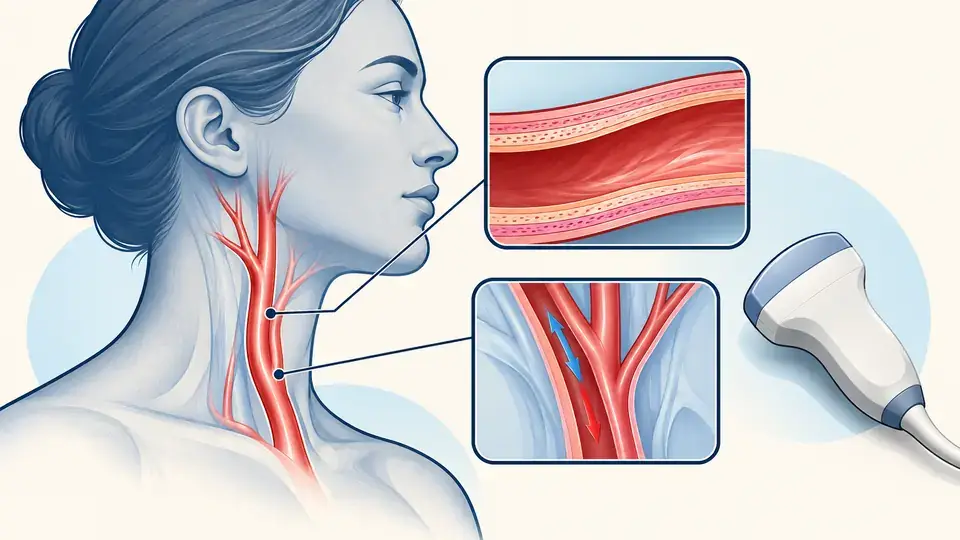
CIMT vs carotid ultrasound describes a difference in the purpose of two ultrasound assessments involving the neck arteries. CIMT measures the thickness of specific artery-wall layers. A carotid ultrasound examination can assess vessel structure and plaque, while Doppler techniques examine blood flow. A report's scope depends on the examination actually performed.
The names can sound interchangeable when you are reviewing screening packages. They are not a reason to book both tests automatically. Understanding the question behind each assessment helps you discuss the options with your healthcare professional and understand the CIMT service offered by Advanced Sonography Screening.
CIMT vs carotid ultrasound: the main distinction
CIMT stands for carotid intima-media thickness. The intima and media are two layers within an artery wall. Ultrasound images allow measurements of those layers at defined locations. The measurement can contribute information about vascular health, but it is not a direct measurement of a coronary artery blockage.
A carotid ultrasound examination looks at the carotid arteries in the neck. Depending on the protocol, it may describe plaque, narrowing and other structural findings. Doppler ultrasound adds information about blood movement. A comprehensive diagnostic carotid duplex study and a preventive screening examination can differ in scope.
When comparing CIMT vs carotid ultrasound, start with the purpose of the appointment rather than the machine being used. The same general imaging technology can answer different questions because the acquisition, measurements and interpretation differ.
What can a CIMT measurement tell you?
CIMT is associated with cardiovascular risk in research populations. However, a measurement needs interpretation in context. Age, the measurement location, image quality and the protocol used can affect the assessment. It should be considered alongside established risk factors and the clinician's evaluation.
Cleveland Clinic's CIMT overview explains the artery-wall measurement and its potential role in assessing risk. A higher measurement is not a prediction that a particular person will have a heart attack or stroke. A lower measurement is not a guarantee that other cardiovascular problems are absent.
Ask what the report measures and whether a previous examination used a comparable method. Comparing unrelated numbers from different protocols can create a misleading impression of change.
What does carotid Doppler ultrasound examine?
Doppler techniques provide information about blood flow through the vessels being examined. A clinician may use the findings, together with images and history, to evaluate suspected disease or another clinical concern. The examination is directed at a particular question rather than general reassurance about every part of the cardiovascular system.
RadiologyInfo's carotid ultrasound guide describes structural and blood-flow assessment. The practice's carotid artery screening page describes its preventive offering. Ask about the exact scope rather than assuming that any screening provides the same information as a physician-ordered diagnostic study.
Neither a neck-artery image nor an artery-wall measurement directly shows the entire circulation of the heart. Different tests are selected for different clinical questions.
Does everyone need preventive carotid screening?
No. Screening decisions should reflect the person's situation and current evidence. The U.S. Preventive Services Task Force recommends against general-population screening for asymptomatic carotid stenosis. That recommendation concerns adults without relevant stroke or transient ischemic attack symptoms.
It should not be confused with a clinician evaluating a symptom or an established condition. CIMT and carotid-stenosis screening also have different purposes; evidence about one should not be used as an automatic endorsement of the other. Discuss whether a proposed test would add useful information or change your care.
Sudden facial weakness, arm weakness or difficulty speaking can be signs of a stroke. Call 911 rather than waiting for a preventive appointment or a screening report.
Questions to ask before comparing packages
A useful CIMT vs carotid ultrasound conversation includes the actual report, not just the test name. Before choosing an appointment, ask:
- Is the purpose preventive risk awareness or diagnostic evaluation?
- Which artery segments and measurements are included?
- Will the report describe wall thickness, plaque, flow or another finding?
- Who interprets the examination, and who handles follow-up?
- How will this information fit with my existing medical care?
Review the CardioProtect CIMT package and the CardioProtect Advanced package for their current listed contents. Package names are an introduction to the service, not a substitute for clarifying its clinical purpose.
Preparing for the appointment and follow-up
Ask the team for instructions specific to the package you select. Neck ultrasound commonly involves access to the neck with a handheld probe, but a combined appointment may include other tests with different preparation requirements. Do not stop prescribed medication unless your treating clinician instructs you to do so.
Bring relevant previous reports and a list of questions. Review screening FAQs for the practice's process and Our Team for professional information. Afterward, share your report with the healthcare professional who knows your history rather than interpreting one measurement alone.
The cardiovascular education page offers further background. For South Jersey and Pennsylvania appointments, check screening locations and contact the practice with questions about availability.
Reading a report without jumping to conclusions
A report is more useful when you can identify what was measured and why. Keep the complete document, including its description of the examination and any interpretation. If a result uses a term you do not understand, ask the healthcare professional to explain it in everyday language. Avoid treating an online range or a single highlighted number as your personal diagnosis.
When reviewing CIMT vs carotid ultrasound findings, also separate observations from decisions. A measurement, an image finding and a recommendation for follow-up are different parts of a report. Your clinician can explain how they relate to your medical history and whether additional information is needed. Do not begin a supplement, stop medication or change an established care plan because of a promotional description of screening.
For a future visit, bring the earlier report rather than trying to reproduce its conclusions from memory. This gives the reviewing professional a clearer starting point and helps you ask whether repeating an examination would answer a useful question.
Frequently asked questions about CIMT vs carotid ultrasound
Is CIMT a type of ultrasound?
Yes. CIMT uses ultrasound images to measure specific layers of the carotid artery wall. The difference in CIMT vs carotid ultrasound is primarily the examination's purpose and measurements, rather than whether sound waves are used.
Does a normal carotid ultrasound mean my heart arteries are clear?
No. An examination of neck arteries does not directly image every coronary artery or exclude every form of heart disease. Your clinician considers the report alongside symptoms, medical history and other appropriate information.
Can CIMT diagnose a future heart attack?
No. A wall-thickness measurement cannot predict a specific future event for an individual. Discuss what the finding adds to your overall risk assessment and whether it should affect care decisions.
Should I compare results from different clinics myself?
Bring both reports to a healthcare professional instead. The protocol, measurement site and reporting method may differ. A meaningful comparison requires more context than the numbers alone.
Where can I ask about the screening offered locally?
Advanced Sonography Screening lists appointment locations in New Jersey and Pennsylvania. Ask the team which package matches the service you are asking about, and discuss medical suitability with your clinician. Understanding CIMT vs carotid ultrasound can make that conversation more precise.
This website may feature logos, trademarks, or references belonging to other companies (“Third-Party Trademarks”). Such use is for informational and reference purposes only and does not imply any affiliation, sponsorship, or endorsement by those third parties. All Third-Party Trademarks are the property of their respective owners. For example, “QuantaFlo® PAD” is a registered trademark and is used here with permission. Selecting the reference links will take you away from AdvancedSonographyScreening.com. Advanced Sonography Screening is not responsible for the content, accuracy, or privacy practices of external websites. Once you leave our site, you will be subject to the terms and policies of the external website.