
QuantaFlo vs ABI: How the PAD Tests Differ
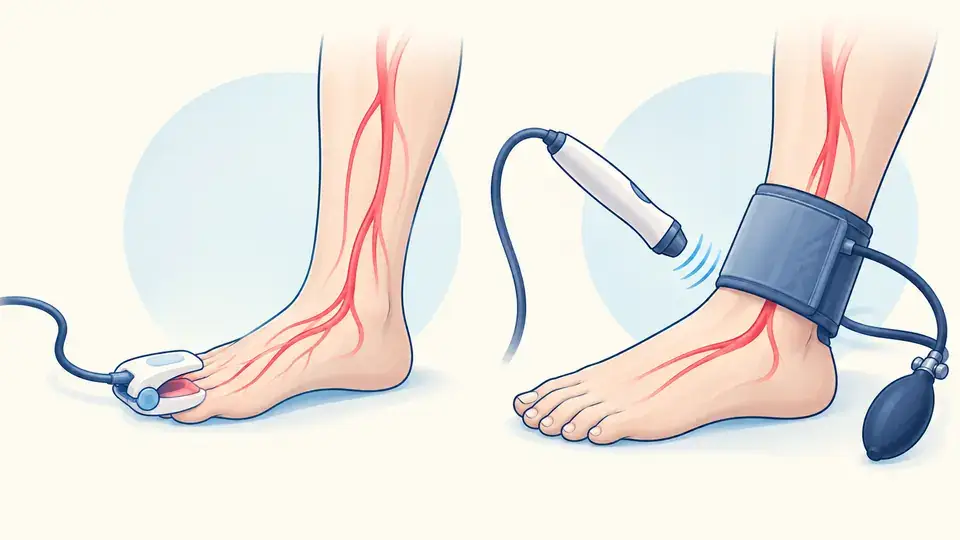
QuantaFlo vs ABI is a comparison between two different ways of assessing circulation in the limbs. QuantaFlo uses optical sensors to examine blood-volume changes. A traditional ankle-brachial index, or ABI, compares blood pressure at the ankle and arm. Both can contribute information about peripheral artery disease, but their measurements are not interchangeable.
For people exploring preventive screening in South Jersey or the Philadelphia area, understanding that distinction helps set realistic expectations. Advanced Sonography Screening offers PAD screening using QuantaFlo. This educational comparison explains the technologies; it does not mean the practice offers every diagnostic test discussed below.
QuantaFlo vs ABI: what does each test measure?
QuantaFlo uses infrared sensors placed on the digits to record changes associated with blood flow. The manufacturer describes the method as volume plethysmography. It produces information that a clinician can consider when evaluating circulation. The equipment and reporting process differ from a blood-pressure-cuff examination.
A traditional Doppler ABI uses cuffs and a Doppler device to obtain ankle and arm pressures. The relationship between those pressures helps a clinician assess whether blood flow to the legs may be reduced. The National Heart, Lung, and Blood Institute describes ABI as a usual first diagnostic test for PAD, alongside medical history and examination.
The practical difference is the question each device measures: blood-volume changes versus pressure relationships. Asking which method produced your report is more useful than assuming that two numbers with similar appearances mean the same thing.
Why might circulation testing be discussed?
PAD affects arteries that supply the limbs, most commonly the legs. A clinician considers symptoms, medical history, examination findings and risk factors when deciding which assessment is appropriate. Smoking history, diabetes and other cardiovascular conditions can be relevant to that conversation.
Leg discomfort is not automatically PAD. Joint, nerve and vein problems can also cause symptoms. If walking brings on recurring leg pain, speak with a healthcare professional about an evaluation rather than relying on a screening appointment alone. Sudden severe limb pain, a newly cold or pale limb, or loss of sensation requires urgent medical attention.
Our cardiovascular education resources provide background on vascular health. A screening result becomes useful when it is interpreted in the context of your own health, rather than treated as a complete explanation for a symptom.
Does a quicker test answer every circulation question?
Convenience matters, but speed does not determine whether a test answers the clinical question. QuantaFlo is designed for portable testing. ABI may be performed with additional waveforms, exercise assessment or other procedures when a clinician needs more detail.
Research also has limits. A 2025 Society for Clinical Vascular Surgery study evaluated QuantaFlo in a controlled clinical setting and called for further investigation of performance in community and home settings. A study result should not be turned into a promise that every screening identifies every case.
When considering QuantaFlo vs ABI, ask what the test can show, what it cannot establish, and what follow-up would be appropriate if the result and your symptoms do not agree. Those questions help connect a convenient appointment with appropriate ongoing care.
Can diabetes or kidney disease affect interpretation?
Some people have arteries that are difficult to compress during pressure testing. This can make an ABI result harder to interpret. The 2024 multisociety PAD guideline discusses additional testing, including toe-pressure assessment, for particular circumstances.
That does not make one method the automatic choice for everyone. Tell the clinician about diabetes, kidney disease, previous vascular procedures, wounds and current symptoms. Do not convert an optical screening value into an ABI category yourself or change medication because of an isolated screening number.
What should happen after a screening result?
Keep a copy of the report and share it with the healthcare professional who manages your care. Ask whether the finding fits your history and whether further evaluation is needed. A reassuring result does not explain persistent symptoms, and an abnormal result does not by itself determine a treatment plan.
Questions worth bringing include:
- Which test produced this result, and what does its measurement mean?
- Does my medical history change how the result should be interpreted?
- Do my symptoms need a separate diagnostic assessment?
- Who should receive the report, and what is the next step?
You can learn about the professionals involved through Our Team and review the practice's screening FAQs before booking.
Where does PAD screening fit within a broader visit?
Circulation in the legs is one part of cardiovascular health. A blood-pressure and BMI assessment addresses different information. Likewise, carotid artery ultrasound examines vessels in the neck rather than answering the same question as a leg-circulation test.
The CardioProtect Advanced package describes the practice's combined screening offering. Review its current contents rather than assuming that a package replaces a physician-directed vascular examination. For appointment options, use the Locations directory or contact the team.
Keep the report connected to your medical history
Before an appointment, make a short record of what prompted your interest. Note whether discomfort happens during walking, at rest or after an injury, and whether you have previous circulation reports. Describe observations accurately instead of deciding that a symptom must be caused by poor circulation. The person evaluating you needs the history as well as the test result.
Afterward, ask for the full report rather than relying on a verbal summary or a photograph of one number. Check that the report identifies the examination performed. If you are comparing QuantaFlo vs ABI results from separate visits, ask your clinician whether the methods and circumstances permit a meaningful comparison. A difference between unlike measurements is not automatically evidence that disease improved or worsened.
For a preventive appointment, also ask how the practice communicates findings that need follow-up. Knowing who receives the report, whom you should contact and what happens next makes the screening process easier to navigate without turning the test into a diagnosis.
Frequently asked questions about QuantaFlo vs ABI
Is QuantaFlo the same as an ABI test?
No. QuantaFlo measures blood-volume changes using optical sensors, while a traditional ABI compares ankle and arm blood pressures. The tests use different methods and their reported values should not be treated as interchangeable.
Does an abnormal QuantaFlo result mean I definitely have PAD?
An abnormal result needs interpretation by a healthcare professional. Your symptoms, examination and medical history affect what it means and whether another assessment is appropriate. Do not use the report alone to diagnose yourself.
Is one test always better than the other?
There is no universal answer for every patient and purpose. The QuantaFlo vs ABI decision depends on the clinical question, available information and testing circumstances. Discuss the reason for testing and the limits of the chosen method with your clinician.
Can I ignore leg symptoms if a screening result is normal?
No. Persistent or changing symptoms need medical evaluation even after a reassuring screening. A screening result does not rule out every vascular, nerve or joint problem.
How can I arrange PAD screening locally?
Check the practice's locations and current booking options for South Jersey and Pennsylvania. Ask which package includes PAD screening and how to share results with your physician. For questions about QuantaFlo vs ABI and the service offered, contact Advanced Sonography Screening before scheduling.
This website may feature logos, trademarks, or references belonging to other companies (“Third-Party Trademarks”). Such use is for informational and reference purposes only and does not imply any affiliation, sponsorship, or endorsement by those third parties. All Third-Party Trademarks are the property of their respective owners. For example, “QuantaFlo® PAD” is a registered trademark and is used here with permission. Selecting the reference links will take you away from AdvancedSonographyScreening.com. Advanced Sonography Screening is not responsible for the content, accuracy, or privacy practices of external websites. Once you leave our site, you will be subject to the terms and policies of the external website.