
Diabetes and Peripheral Artery Disease: Questions to Ask
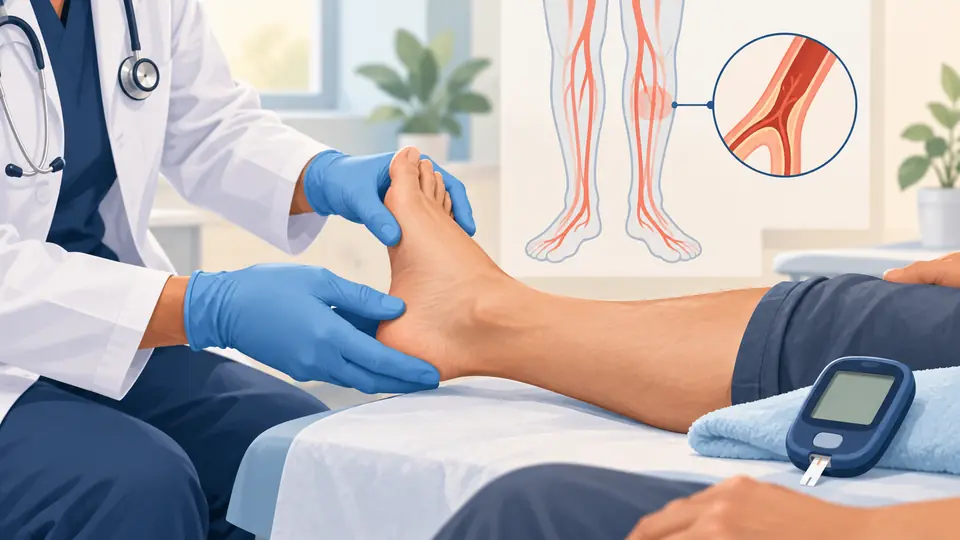
Diabetes and peripheral artery disease can affect the same person, but circulation is only one part of foot and leg health. Diabetes can also damage nerves, changing how discomfort or injury is noticed. A useful care discussion addresses circulation, sensation, skin changes and your overall medical history together.
If you are considering PAD screening with QuantaFlo, start by discussing the purpose of testing with your healthcare professional. Advanced Sonography Screening offers preventive cardiovascular services in New Jersey and Pennsylvania. These services provide information for follow-up rather than replacing a diabetes care plan or an evaluation of a foot problem.
Diabetes and peripheral artery disease: why discuss both?
PAD involves reduced blood flow through arteries, often affecting the legs. Diabetes is one of the health conditions considered when clinicians assess vascular risk. Nerve changes and circulation problems are different issues, so one type of examination does not automatically answer every question about your feet.
The National Institute of Diabetes and Digestive and Kidney Diseases explains that diabetes can reduce sensation and affect blood flow. A sore may be less noticeable when sensation is reduced, and impaired circulation can make healing more difficult. This is why looking after foot health includes more than asking whether pain is present. The American Diabetes Association’s 2026 foot-care guidance also treats neurological and vascular assessment as distinct parts of a comprehensive foot evaluation.
Tell the healthcare professional if you have had a wound, a previous vascular procedure or a change in walking ability. Explain what has changed and when. Avoid assuming that a long-standing diagnosis of diabetes accounts for every new symptom.
Does having no pain mean circulation is normal?
No. Pain is not a complete measure of vascular or foot health. Some people with PAD do not report the familiar pattern of exertional calf discomfort. Nerve damage can also change sensation, making an injury or pressure area harder to notice.
Ask your diabetes care team how to check your feet and which changes should prompt a call. If seeing or reaching your feet is difficult, explain that practical problem so the team can help you find a workable approach. A plan is more useful when it fits what you can actually do.
This does not mean every person without pain needs every circulation test. The decision depends on individual risk, history and examination. The important point is that absence of discomfort should not be the only information used to judge foot health.
What observations are worth reporting?
Describe a new sore, skin color change, difference in temperature, numbness, weakness or a change in how far you can walk. Explain whether a problem affects one foot or both. Include what you have observed rather than trying to decide whether it is caused by a nerve or an artery.
A wound, redness, warmth, drainage or concern about infection needs timely advice from your healthcare team. Sudden severe limb pain, a newly cold or pale limb or loss of movement or sensation requires urgent medical attention. A routine screening appointment should not delay care for an acute change.
For background on symptom evaluation, see our guide to leg pain when walking and circulation checks. Keep any symptom notes brief and accurate so the clinician can identify the details that matter.
How might diabetes affect circulation testing?
A traditional ankle-brachial index compares ankle and arm blood pressures. In some people, including those with diabetes or kidney disease, arteries may be difficult to compress. This can complicate interpretation of a pressure-based result.
The 2024 multisociety PAD guideline discusses additional measurements, including toe-pressure assessment, in particular circumstances. Your clinician decides whether another test is appropriate. A difficult-to-interpret result is a reason for an informed evaluation, not a reason to choose a replacement test from advertising alone.
QuantaFlo assesses blood-volume changes using optical sensors. Our QuantaFlo versus ABI article explains the difference in methods. Ask which examination produced your report and what it can establish before comparing its values with another testing system.
Questions for your next diabetes care visit
Bring up circulation as part of a broader discussion rather than as an isolated shopping decision. Explain your concern, whether it is a new symptom, an earlier report or uncertainty about preventive screening. The professional who knows your history can help identify the next useful question.
- Does my history or foot examination suggest a circulation assessment?
- How are sensation and blood flow being assessed separately?
- Would a test result change the next step in my care?
- Who should review a screening report if I arrange an appointment?
- Which foot changes should make me contact the team promptly?
Take an updated medication list and relevant previous reports. If different practices are involved, confirm how they share records. Clear responsibilities help keep a screening result from becoming a document that no one has been asked to review.
Where preventive screening fits
Preventive screening may add information to a care discussion, but it does not replace regular diabetes management, a foot examination or evaluation of symptoms. Review the CardioProtect Advanced package for the assessments currently offered and clarify what the appointment includes.
The practice also describes blood-pressure and BMI assessment, which addresses different information. A package combining several assessments should still have a clear purpose for the person receiving it. More measurements are not automatically more useful if they do not answer an appropriate question.
Read screening FAQs and Our Team before booking. For diabetes and peripheral artery disease concerns, discuss medical suitability with your treating healthcare professional and use the screening provider for questions about its services and appointment process.
Use the report as a starting point for follow-up
Keep the complete report, including the test name and interpretation. Share it with the clinician responsible for your diabetes or vascular care and ask how it fits with information already available. Do not change prescribed medication because of a screening value alone.
If a report is abnormal, our follow-up question guide can help you prepare the conversation. A reassuring result also does not remove the need to report a new wound, changing sensation or ongoing symptoms.
For current appointment options, check the Locations directory or contact Advanced Sonography Screening. Explain the service you are asking about and confirm the package and location before booking.
Frequently asked questions
Does diabetes mean I definitely have PAD?
No. Diabetes is relevant to vascular risk, but it does not establish a PAD diagnosis. Your history, symptoms, examination and appropriate tests guide that assessment.
Can nerve damage hide a foot problem?
Reduced sensation can make an injury or pressure area less noticeable. Ask your diabetes care team how to check your feet and when to report changes. Do not rely on pain alone to decide whether a foot needs attention.
Is one circulation test best for everyone with diabetes?
No single examination answers every question. Diabetes and peripheral artery disease assessment may involve different tests depending on the clinical situation. Ask what the proposed examination measures and how the result would be used.
Can a screening appointment assess an infected wound?
A possible infection or a wound that is not healing needs appropriate medical care. Contact your healthcare team promptly rather than waiting for a preventive screening package. Sudden severe changes require urgent attention.
What should I do after receiving a screening report?
Keep the full document and arrange review with the healthcare professional who knows your history. Ask what follow-up is needed and who should coordinate it. For records or appointment questions, contact the screening team.
This website may feature logos, trademarks, or references belonging to other companies (“Third-Party Trademarks”). Such use is for informational and reference purposes only and does not imply any affiliation, sponsorship, or endorsement by those third parties. All Third-Party Trademarks are the property of their respective owners. For example, “QuantaFlo® PAD” is a registered trademark and is used here with permission. Selecting the reference links will take you away from AdvancedSonographyScreening.com. Advanced Sonography Screening is not responsible for the content, accuracy, or privacy practices of external websites. Once you leave our site, you will be subject to the terms and policies of the external website.